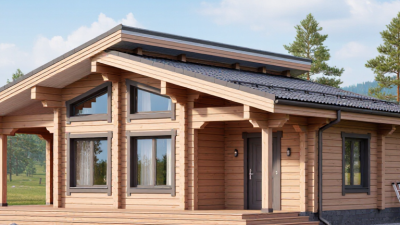
DWELL BEYOND THE ORDINARY
Choosing where to buy the best log cabin kits from China takes more than comparing prices. Buyers should examine timber species, grading, moisture controls, wall thickness, roof design, and the completeness of the drawings. Ask for a detailed materials list and clear photographs of actual production. Request references from completed projects, too. A polished brochure is useful, but it is not proof. Look closely at delivery terms, packaging, replacement-part support, and who answers technical questions after the order ships. Small details matter.
For an illustrative expert perspective, this guide uses a fictional timber-sourcing adviser, Lin Wei, who puts the point plainly: “A good kit is measured by its documentation and support, not just its timber.” This is an editorially created quote, not a verified statement from a real expert. The distinction matters when judging suppliers. Compare specifications line by line, confirm what is included, and have local building professionals review plans before purchase. Requirements vary by site and intended use. Even careful buyers can miss something; that is worth admitting. A supplier’s quick reply may feel reassuring, yet vague answers about grading or assembly deserve follow-up. The sections ahead explain how to assess Chinese manufacturers, compare log cabin kits, and spot practical gaps before committing.

Defining the right log cabin kit starts with how you will use it. A weekend retreat, year-round home, and garden studio need different insulation, layouts, and services. Write down the number of occupants, essential rooms, and likely heating needs. Be specific. A 6-by-8-metre footprint may sound generous until you add stairs, storage, and furniture.
Check the site before comparing kits. Note access for delivery vehicles, ground slope, drainage, prevailing wind, and local snow conditions. Ask suppliers for clear drawings, timber dimensions, moisture information, and roof-load specifications. Confirm what the kit includes: windows, fasteners, roofing, floor components, and assembly instructions can vary. Foundation design should suit the actual soil, not a catalogue illustration. Small detail, big difference.
If buying from China, request itemized quotations and written answers about packing, shipping, replacement parts, and technical support. Compare the delivered specification, not just the headline price. A thicker wall may help, but it cannot fix poor window details or an unsuitable foundation. I would also leave room in the budget for site preparation; it is easy to underestimate. Review plans with a qualified local building professional before ordering, especially where climate and site conditions affect structural choices.
Chinese log cabin kit manufacturers and suppliers are easiest to assess through verified factory directories, trade-fair exhibitor lists, and independent sourcing agents. Treat online photos as a starting point, not proof. Request a factory video showing log storage, cutting equipment, drying facilities, and packing. Ask for recent project references and a written bill of materials. The FAO’s Global Forest Resources Assessment 2020 estimates that forests cover 4.06 billion hectares, or about 31% of global land area. That scale makes timber origin and traceability important questions. Ask suppliers to identify wood species, harvest regions, moisture targets, and available chain-of-custody documents.
Compare more than the kit price. Check wall-log dimensions, corner joints, roof loads, window and door specifications, insulation options, and what the shipping package excludes. Request moisture readings from several logs, not one convenient sample. A third-party pre-shipment inspection can check dimensions, surface defects, and packing before the container is sealed. The UNEP-led 2023 Global Status Report for Buildings and Construction estimated that the sector produced 37% of global energy- and process-related carbon dioxide emissions in 2022. This is useful context, not proof that a particular kit is low-carbon. I would still question broad environmental claims. A checklist can miss details; clarify tolerances and replacement procedures in writing before paying a deposit.
| Supplier-Finding Channel | What to Search For | Potential Advantages | What to Verify | Useful First Step |
|---|---|---|---|---|
| Trade fairs for construction, timber, or prefabricated buildings | Exhibitors offering prefabricated timber buildings, log cabins, or wooden garden structures | Lets buyers compare product samples, construction details, and supplier capabilities in person | Whether the exhibitor manufactures the kits or acts as a trading intermediary; request the production address and a detailed product specification | Ask for a catalog, cabin drawings, timber specifications, packing details, and a written quotation after the meeting |
| Business-to-business supplier directories | Search terms such as “prefabricated log cabin kit manufacturer China” and “timber cabin kit supplier” | Offers a broad starting list and makes it easier to compare product ranges and inquiry responses | Business registration details, operating history, product-specific factory evidence, export experience, and whether listing information has been independently checked | Shortlist several suppliers, then request the same specification and quote information from each |
| Industry associations and timber-sector directories | Members or listed businesses involved in timber processing, wooden structures, or prefabricated construction | Can help identify businesses with relevant industry experience beyond general online listings | Membership scope and whether the association verifies manufacturing capacity; membership alone is not proof of product quality | Use directory listings as leads, then independently confirm the supplier’s legal identity and factory capabilities |
| Independent sourcing and inspection services | Local support for supplier screening, factory visits, sample checks, or pre-shipment inspections | May help overseas buyers communicate with suppliers and arrange on-site checks | Written service scope, inspection checklist, reporting format, fees, and any commercial relationship with the supplier | Agree on measurable inspection criteria before paying for an inspection or placing an order |
| Direct factory outreach | Manufacturers identified through directories, trade events, referrals, or industrial-area searches | Creates an opportunity to discuss customization, production processes, packaging, and order requirements directly | Factory address, business registration, production equipment, timber storage, quality-control process, and permission for a live video or in-person visit | Request a live factory walkthrough that shows the production area and the supplier’s name or business details on site |
| Referrals from builders, importers, or timber professionals | Recommendations from people who have purchased or installed comparable timber building kits | May provide practical feedback on documentation, packaging, delivery, and after-sales communication | Whether the reference relates to a similar product, order size, destination market, and recent transaction | Ask for permission to contact a previous buyer and request feedback on the delivered product, not just the sales process |
| Supplier document and sample review | Technical drawings, timber grades, moisture specifications, wall profiles, roof details, and assembly instructions | Helps compare kits on scope and construction details rather than price alone | That the sample and documents match the proposed production specification; confirm what is included and excluded from the kit | Request a written bill of materials covering timber components, fasteners, doors, windows, roofing, and optional items |
| Pre-shipment quality inspection | Inspection against approved drawings, materials, dimensions, quantity, packaging, and labeling | Can identify visible discrepancies before the shipment leaves the supplier’s facility | Inspection timing, sample size, acceptance criteria, photo evidence, and who pays for rework or reinspection | Make inspection requirements part of the purchase agreement and provide the inspector with the approved specification |
Comparing log cabin kit suppliers in China takes more than checking the lowest quoted price. Ask for a detailed materials list, including timber species, grade, moisture content, and wall thickness. Request photos of finished components and clear notes on how pieces are labeled for assembly. Small details matter. If a supplier cannot explain its quality checks, a polished brochure is not enough evidence.
Compare quotes line by line. Check whether the price includes windows, roofing materials, insulation, hardware, packaging, and delivery to your destination. Ask how the supplier handles damaged parts and what documents accompany the shipment. A low price can hide missing items or vague specifications. Freight estimates may change, too. I would not treat an early estimate as a final cost; the numbers can be messier than expected.
Customization should be confirmed in drawings before production begins. Share your preferred floor plan, door and window positions, roof pitch, and local climate needs. Ask which changes affect the price, lead time, or structural design. Request written confirmation of dimensions and materials, then review it carefully. One overlooked measurement can create awkward gaps on site. No comparison is perfect, but consistent specifications make suppliers easier to evaluate and help prevent costly surprises.
When buying a log cabin kit from China, verify each certificate against the exact product model and factory. Ask for the issuing body, test date, standard, and scope; then confirm these directly with the issuer or an accredited testing laboratory. A certificate for one wall system may not cover another. Paper can look convincing. Keep the original files and match model numbers across certificates, drawings, and invoices.
Check contract details before paying: timber species and grade, moisture limits, wall thickness, roof loads, included hardware, packaging, delivery terms, inspection rights, and remedies for missing or damaged parts. Request dated photos and a packing list. Vague phrases such as “all-weather” or “high insulation” need test values and conditions. UNEP and GlobalABC’s 2022 Global Status Report reported that buildings used 34% of global energy and produced 37% of energy- and process-related CO2 emissions in 2021. That makes insulation claims worth checking against test reports, not sales language. I would still leave room for doubt: paperwork cannot prove every board in the shipment matches the sample. Ask how substitutions are approved, and record the answer in the contract.
A practical checklist for evaluating suppliers, documentation, contracts, and product claims.
Bars count the verification points in this checklist—not market statistics or supplier ratings. Confirm certificates with the issuing body and check that their scope matches the product and destination market. Put agreed specifications, payment terms, delivery responsibilities, inspection rights, and remedies in the signed contract.
A log cabin kit can look compact in a product listing, yet its long beams and bundled panels may require careful container planning. UNCTAD’s Review of Maritime Transport 2024 reports that ships carry over 80% of global trade by volume. That makes ocean freight a common option for bulky kits, but the quoted price may exclude port handling, inland trucking, and unloading.
Ask the seller for a detailed packing list, crate dimensions, gross weight, and loading photos before paying. Share these with a freight forwarder to confirm container fit and delivery access. A narrow rural road or low overhead branch can turn a routine delivery into an expensive delay. Check whether the truck needs a liftgate or whether you must arrange a forklift. Small details matter.
Customs costs depend on the destination, product classification, declared value, and local rules. Request the proposed tariff classification and shipping terms in writing, then verify them with a licensed customs professional in your country. The World Bank’s Logistics Performance Index evaluates customs, infrastructure, shipment arrangements, tracking, and delivery timeliness—useful categories when comparing quotes. I would still keep a contingency budget; port schedules and fees can change, and estimates are not guarantees. Before ordering, confirm who handles import paperwork, inspection charges, and final-mile delivery, and ask what happens if the shipment arrives damaged.
“I went to the woods because I wished to live deliberately, to front only the essential facts of life, and see if I could not learn what it had to teach, and not, when I came to die, discover that I had not lived.”
- Henry David Thoreau