Why Choose Pre Built Cabins for Global Buyers?
For global buyers, pre built cabins offer a practical path to faster, more controlled construction. Factory production can reduce weather delays, material waste, and inconsistent workmanship. A cabin arrives with major components prepared, inspected, and ready for careful assembly. That matters when the building site is remote, seasonal, or difficult to access.
Michelle Kaufmann, a respected architect and pioneer of prefabricated housing, said, “Prefab is not a style; it is a process.” This idea remains important. Pre built cabins are not automatically better because they are manufactured indoors. Their value depends on design quality, insulation, transport planning, and installation expertise. Buyers should examine wall systems, roof loads, moisture protection, energy performance, and warranty coverage. Small details matter. A poorly sealed window can undermine an otherwise efficient cabin.
International purchasing also requires practical judgment. Local climate, planning requirements, foundation conditions, and utility connections can change the final cost. A supplier may offer an attractive factory price, yet shipping, cranes, site preparation, and local labor can add unexpected expenses. That is where careful documentation helps. Ask for technical drawings, material specifications, installation guidance, and references from completed projects.
The process is efficient, but not effortless. Good suppliers communicate clearly and admit limitations. Global buyers should compare more than photographs and promises. They should choose pre built cabins that fit their land, climate, budget, and long-term use. That choice may take longer, but it can prevent expensive mistakes.
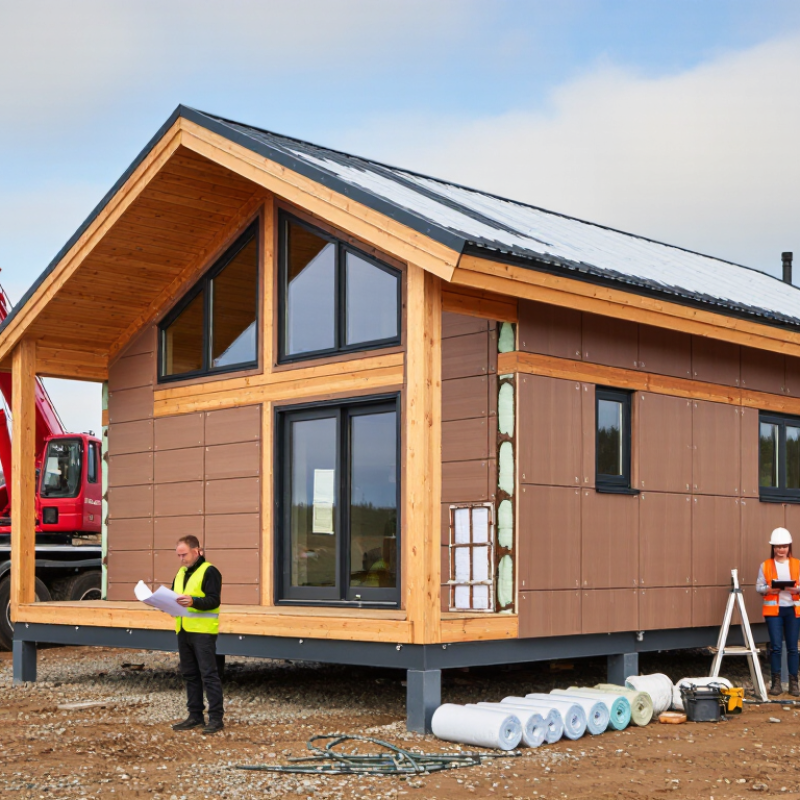
What Are Pre-Built Cabins and How Do They Work?
A pre-built cabin is a building made largely in a controlled factory environment.
Its walls, roof panels, floors, windows, and service openings are prepared before delivery. Workers cut materials accurately, seal joints, and install selected fittings indoors. The finished sections then travel by truck to the site. There, a crane or lifting team positions them on prepared foundations. The process is closer to assembly than traditional construction. That difference matters.
McKinsey Global Institute’s 2019 report, Modular Construction: From Projects to Products, estimated that modular construction could create a 130-billion-dollar annual market in Europe and the United States. It also identified potential annual savings of 22 billion dollars. These figures cover wider modular construction, not cabins alone. Still, they show why global buyers examine factory production. On site, crews connect electricity, plumbing, insulation, and exterior finishes. Connections follow. Inspections remain essential.
The 2023 Global Status Report for Buildings and Construction, published by UNEP and the Global Alliance for Buildings and Construction, linked buildings to 37% of global energy-related and process emissions. Factory-controlled production may reduce material waste and weather-related delays, but transport creates its own environmental cost. Buyers should request structural drawings, material specifications, installation records, and local code confirmation. A cabin may arrive quickly. Speed is not certainty. Poor foundations, unclear utility connections, or unsuitable insulation can erase the advantage. That is the part many sales pages simplify.
Why Are Pre-Built Cabins Suitable for Global Buyers?
Why Are Pre-Built Cabins Suitable for Global Buyers?
Pre-built cabins suit global buyers because they simplify a complicated building process. Components are produced in controlled facilities, then transported for faster site installation. McKinsey’s 2019 modular construction report found that modular methods can reduce project schedules by 20% to 50%. That advantage matters when labor shortages, weather, or remote locations delay conventional construction.
The benefits are practical. Buyers can inspect factory samples, review material specifications, and track production milestones before delivery. Standardized manufacturing may also improve consistency between units. The International Energy Agency reported in its 2023 Global Status Report for Buildings and Construction that buildings consume about 30% of global final energy. Therefore, insulation, airtight doors, glazing, and efficient heating deserve careful attention in cabin design.
However, pre-built does not mean universally ready. Local buyers must verify wind loads, snow loads, fire rules, accessibility requirements, and foundation conditions. Shipping dimensions can increase costs, especially for distant islands or mountainous regions. A cabin designed for a mild climate may perform poorly in severe cold. This is where professional engineering and local certification become essential. The process is efficient, but not effortless. Some projects still need site adaptations, and ignoring that detail can undermine the original savings.
How Do Pre-Built Cabins Simplify International Purchasing?
Pre-built cabins simplify international purchasing by turning a complex construction project into a clearer, documented process. Buyers can review floor plans, material specifications, installation requirements, and delivery dimensions before placing an order. This makes price comparisons more practical across suppliers and regions. The paperwork matters.
A reliable supplier should provide structural details, packing lists, technical drawings, and maintenance guidance. These documents help freight agents calculate space and help local professionals prepare foundations, drainage, and electrical connections. Standardized production can also reduce unpredictable site labor and shorten installation time. Small errors travel. A missing measurement may affect transport, permits, or final assembly.
International buyers still need to check local building codes, climate demands, import procedures, and utility standards. A cabin designed for a mild coastal climate may need different insulation or roof loading for a cold inland region. Clear communication is essential, especially when measurements use different units. Translation can also introduce mistakes. Buyers should request written confirmations for finishes, delivery terms, inspection points, and after-sales support. Pre-built does not mean effortless. Some projects require local engineering review, and overlooking that step can create delays or unexpected costs. A careful purchasing process leaves room for questions, revisions, and honest uncertainty before production begins.
Why Choose Pre-Built Cabins for Global Buyers?
Pre-built cabins can simplify international purchasing when their modules are planned around standardized freight equipment. The chart compares common ISO container lengths, helping buyers evaluate packaging, loading, routing, and port-handling requirements before placing an order. Dimensions are based on typical ISO 668 and ISO 1496-1 specifications.
What Factors Influence Their Cost, Quality, and Delivery?
Why Choose Pre Built Cabins for Global Buyers?
What Factors Influence Their Cost, Quality, and Delivery?
Pre-built cabins attract global buyers because factory production can reduce site labor and shorten installation time. Yet the purchase price rarely tells the whole story. Cabin size, insulation level, window design, plumbing, electrical systems, and interior finishes strongly affect cost. Shipping distance matters too. A unit traveling by sea needs suitable packing, lifting points, and weather protection. Local site preparation may add concrete work, drainage, utility connections, and permit expenses.
Quality depends on design control and production discipline. Experienced manufacturers use moisture-resistant materials, accurate cutting equipment, and documented inspections. Buyers should request structural drawings, material specifications, test records, and photographs from different production stages. Small details matter. A poorly sealed corner can cause expensive moisture damage later. Factory quality is helpful, but it is not automatically perfect. Independent inspection before shipment can reveal missing fasteners, uneven floors, or damaged finishes.
Delivery also depends on communication. Clear drawings should confirm dimensions, door positions, utility entry points, and unloading requirements. Export documents must match the destination country’s rules. Delays often begin with unclear responsibilities, not transport itself. Weather, port congestion, customs checks, and remote roads can change schedules. A realistic supplier should provide milestones rather than an overly confident arrival date. Buyers may save money by accepting standard layouts, but that choice can create costly changes after production starts. Careful planning is less exciting, but usually more reliable.
How Can Buyers Evaluate Suppliers and Customization Options?
For global buyers, pre-built cabins can reduce construction time and simplify site planning.
Yet the supplier matters as much as the cabin design. Buyers should request company registration details, production records, quality procedures, and recent project references. A video tour is useful, but an independent factory inspection offers stronger evidence. Ask how materials are stored, measured, tested, and protected from moisture.
Technical documents deserve close attention.
Request structural drawings, insulation values, fire-safety data, electrical diagrams, and installation instructions. These documents should match the actual cabin, not a generic template. Check whether the design suits local wind, snow, seismic, and energy requirements. A cabin approved in one region may need significant changes elsewhere. That detail is easy to miss.
Customization should begin with a written specification.
Define room sizes, window positions, floor finishes, plumbing points, heating, ventilation, and furniture limits. Ask which changes affect price, weight, production time, or transport dimensions. Sample panels can reveal color differences and surface quality better than digital images. Leave room for technical review. In one project assessment, a late socket change affected cabinetry and delivery timing.
The lesson was uncomfortable but clear: attractive drawings do not replace coordinated engineering.
Confirm warranty coverage, spare-part access, installation support, and responsibility for defects before paying. Cost is important. Traceability matters more.