DWELL BEYOND THE ORDINARY
Why Choose Laminated Wood Veneer Panels for Projects?
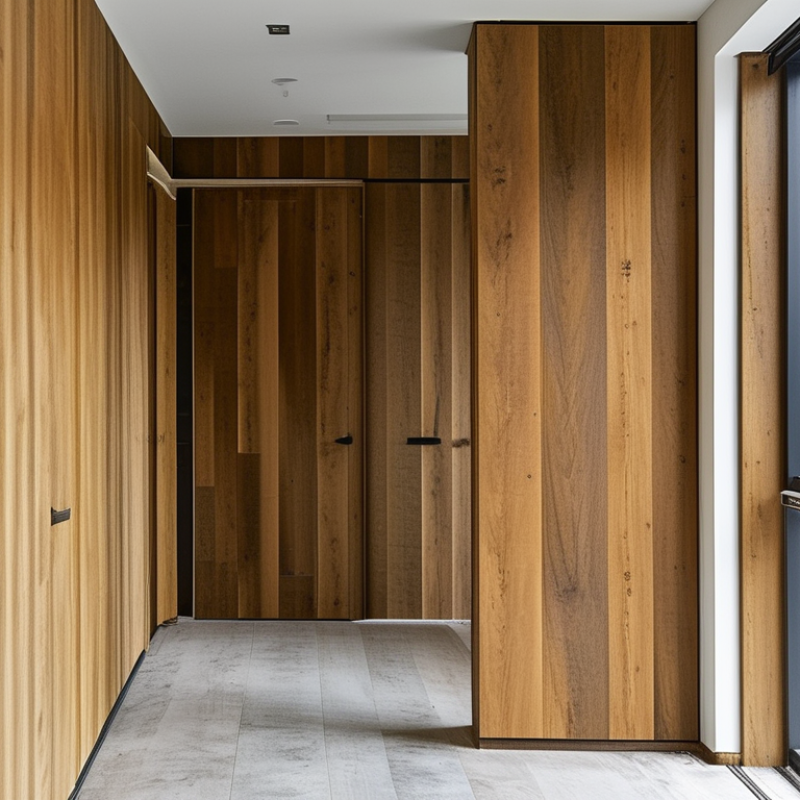
Choosing Laminated Wood Veneer Panels involves more than selecting an attractive surface. These panels combine thin wood veneers with structural adhesives, creating a stable material for furniture, doors, wall features, and interior cabinetry. Their layered construction can reduce warping when temperature and humidity change. It also allows designers to use clear grain patterns across large surfaces.
The details matter. A panel beside a sunny window may face heat, glare, and repeated cleaning. Correct veneer direction, adhesive quality, edge sealing, and support spacing can influence its service life. Experienced fabricators also inspect the core, balance the panel, and allow the material to acclimate before installation. Small mistakes can become visible at joints.
Architect and mass-timber advocate Michael Green has observed, “Wood is the only structural material that grows naturally and can be replenished.” His statement reflects both the promise and responsibility of wood-based design. Laminated Wood Veneer Panels can help projects achieve a warm, tactile finish while using wood efficiently. However, they are not automatically sustainable or maintenance-free. Responsible sourcing, low-emission adhesives, careful manufacturing, and realistic moisture control still matter.
That is the less glamorous truth.
Project teams should compare certified sourcing, panel composition, fire performance, formaldehyde emissions, and local code requirements. They should also request samples before approving a finish. A beautiful sample can hide difficult edge behavior. Careful evaluation turns a decorative decision into a dependable specification.
Laminated wood veneer panels are engineered boards with a real wood surface bonded to a stable core. The veneer may come from oak, walnut, maple, or other carefully sliced timber. Thin wood layers are pressed onto plywood, medium-density fibreboard, or another structural base. Construction varies.
This design creates the appearance of solid wood while using fewer natural resources. It also reduces movement caused by humidity and temperature changes. In practical projects, panels can cover walls, cabinet doors, ceilings, and built-in furniture. Their consistent thickness helps installers achieve clean joints and predictable dimensions. A clear finish can reveal the grain, while a tinted coating can adjust the color without hiding every detail.
However, laminated veneer is not maintenance-free. The exposed edges need proper sealing, especially near sinks or exterior doors. Poor bonding may cause lifting, bubbling, or visible seams. Before installation, inspect each panel under natural light and check its moisture content. I have found that rushed storage often creates problems later; panels should remain flat and protected from damp floors. Matching grain direction also requires patience. Small differences between sheets may remain visible, and that is not always a defect. It can be part of the wood’s character.
Manufacturing starts with carefully selected logs. Workers remove bark, then rotate each log against a sharp blade. This produces continuous veneer sheets with consistent grain patterns. Sliced veneer may also be used when appearance matters more than speed.
The sheets are clipped, graded, and dried before assembly. USDA Forest Products Laboratory guidance notes that interior wood products commonly target about 6–8% moisture content. This reduces later shrinking and panel distortion. However, the correct target changes with climate and building conditions. That detail is often overlooked.
Adhesive is applied in a controlled layer. Operators stack the veneers with aligned or alternating grain directions. A hot press then combines heat, pressure, and time to create a stable panel. Press temperature and pressure depend on wood species, veneer thickness, and adhesive chemistry. Too little pressure can leave weak bonds. Too much may crush the wood.
After pressing, panels are trimmed, sanded, inspected, and sometimes sealed on the edges. Visual checks can reveal gaps, overlaps, or uneven surfaces. Laboratory testing adds stronger evidence, including bond strength, formaldehyde emissions, moisture resistance, and dimensional stability. The FAO Global Forest Products Facts and Figures 2022 reported global plywood production above 170 million cubic meters, showing the scale of engineered wood manufacturing. Yet volume does not guarantee quality. A rushed drying cycle or poor veneer grading can still compromise a carefully designed project.
Laminated wood veneer panels bring warmth, consistency, and practical strength to many projects. Their layered construction helps limit movement caused by changing humidity. This matters in wall features, furniture fronts, ceilings, and built-in storage.
The surface can resemble natural timber while using resources more efficiently. Veneer patterns create a refined appearance without the cost of thick solid wood. Panels are also easier to handle on site. Clean edges support accurate cutting and faster installation. In practical fitting work, stable panels often reduce visible gaps between adjoining sections. They can improve acoustic comfort when combined with suitable backing materials. They are not maintenance-free, though. Poor sealing or constant moisture may still cause swelling and edge damage. I would check this risk before choosing them for kitchens or washrooms.
Tips: Store panels flat in the project space before installation. Allow them to adjust to local temperature and humidity. Inspect every sheet under strong light. Small color differences can become obvious after assembly. Use sharp tools to prevent chipped veneer edges. Follow the manufacturer’s installation guidance, especially around expansion gaps. One overlooked detail can weaken an otherwise careful design.
Laminated wood veneer panels combine a real wood surface with an engineered core. In workshop use, they often provide a steadier alternative to solid timber. Wide solid boards can expand, shrink, or cup when indoor humidity changes. Veneer panels usually reduce these movements across cabinet doors, wall sections, and furniture sides.
Compared with MDF, laminated veneer panels offer more natural grain and a warmer tactile finish. MDF remains easier to paint and machine into detailed profiles. Plywood can provide excellent strength, especially for shelving and structural components. However, its exposed edges may require careful finishing. Veneer panels can look more refined, but their surface layer is thin. Aggressive sanding may reveal the core.
Particleboard is generally more economical, yet it can lose strength after repeated screw removal or moisture exposure. Laminated veneer panels usually handle fasteners better, depending on their core and construction. They are not waterproof, though. A sink cabinet still needs sealed edges, suitable adhesives, and sensible ventilation. Small oversights matter.
Solid wood has unmatched depth and can be repaired repeatedly. It also demands more attention during installation. I have seen a carefully finished panel fail because an unsealed cut edge absorbed water. That experience is easy to remember, but not always easy to prevent. Project requirements should guide the choice: appearance, load, humidity, machining, budget, and expected maintenance all deserve equal attention.
| Evaluation Dimension | Laminated Wood Veneer Panels | Plywood | MDF | Particleboard | Solid Wood Panels |
|---|---|---|---|---|---|
| Basic Construction | Engineered veneer Multiple thin wood veneers are bonded in aligned or cross-oriented layers to improve consistency and panel stability. | Several wood veneers are cross-laminated, normally with alternating grain directions. | Refined wood fibers are combined with resin and compressed into a uniform panel. | Wood chips and particles are bonded with resin and pressed into a board. | A single piece or edge-glued strips of natural timber with visible grain variation. |
| Typical Thickness Range | Approximately 12–75 mm, depending on the structural or architectural specification. | Approximately 3–40 mm; thicker panels can be manufactured by specialty processes. | Approximately 3–40 mm, with thicker boards available for specific applications. | Approximately 6–40 mm. | Approximately 18–50 mm for common furniture and interior panel applications. |
| Typical Density | Approximately 500–650 kg/m³, depending on wood species, veneer arrangement, and adhesive content. | Approximately 450–700 kg/m³, depending on species and panel grade. | Approximately 600–800 kg/m³. | Approximately 550–750 kg/m³. | Approximately 400–800 kg/m³, depending strongly on species and moisture content. |
| Structural Load Capability | High. Consistent veneer orientation provides strong bending and axial performance when the panel is correctly designed and supported. | Medium to high. Cross-lamination provides good two-directional strength and dimensional stability. | Low to medium. Suitable for furniture and interior components but less efficient for primary structural loading. | Low. Best suited to non-structural furniture, shelving, and interior applications. | High along the grain. Performance varies considerably with knots, grain direction, species, and defects. |
| Dimensional Stability | Good to very good. Engineered layering reduces the effect of natural timber movement compared with a solid board. | Very good. Cross-oriented veneers limit expansion and contraction across the panel. | Good in dry interiors. Uniform construction reduces grain-related movement, but swelling can occur after water exposure. | Fair. Panel movement and edge swelling are more likely in humid or wet conditions. | Fair to good. Natural expansion, contraction, warping, and checking must be considered during design. |
| Moisture Resistance | Good when manufactured with a moisture-resistant or exterior-rated adhesive and properly sealed; not automatically waterproof. | Ranges from interior-grade to exterior-grade. Exterior performance depends on veneer quality, adhesive, and edge protection. | Generally intended for dry interior use; moisture-resistant grades offer improved performance but still require edge sealing. | Generally limited to dry interior use; exposed edges can swell significantly when wet. | Can perform well when the species, coating, detailing, and maintenance are appropriate; untreated wood remains moisture-sensitive. |
| Surface Appearance | Natural veneer appearance with controlled grain direction; can be clear-coated, stained, painted, or overlaid. | Visible veneer layers and face grain; appearance depends on face-veneer grade and finishing. | Very smooth and uniform surface; commonly painted, laminated, or veneered rather than used unfinished. | Coarse, visually consistent core; usually covered with laminate, veneer, or paint. | Distinctive natural grain and character; knots and color variation may be visible. |
| Edge Quality and Fastener Holding | Good to very good. Layered construction provides reliable screw and bolt holding when fasteners are correctly sized and positioned. | Good. Usually holds screws better than MDF and particleboard, particularly when fasteners are placed away from damaged edges. | Fair to good. Good in the panel face; edge fastening often benefits from pilot holes, inserts, or specialized screws. | Fair to low. Fastener holding is weaker near edges and may deteriorate after repeated assembly. | Very good. Strong fastener holding is possible, although splitting and grain direction must be managed. |
| Machining and Fabrication | Can be sawn, drilled, routed, and CNC-machined; cutting tools should account for alternating veneer grain and possible tear-out. | Easy to cut and drill; exposed edges may require sanding, edge banding, or a separate finish. | Excellent for routing and detailed machining; produces fine dust and requires effective dust extraction. | Easy to cut, but edges can chip or crumble and are less suitable for intricate profiles. | Highly workable, but grain direction, knots, moisture content, and natural defects affect machining results. |
| Weight Efficiency | Good strength-to-weight efficiency for many structural and architectural applications. | Good, especially where two-directional strength is required at moderate panel weight. | Moderate to low because the panel is relatively dense for its structural capacity. | Moderate; weight varies widely with density and resin content. | Varies widely by species; lightweight species can be efficient, while dense species add substantial weight. |
| Environmental Considerations | Efficient use of wood resources because thin veneers can be produced from smaller or more uniform logs; sourcing and adhesive emissions should be verified. | Uses wood efficiently through veneer production; environmental performance depends on certified sourcing and resin system. | Uses wood fibers and residual wood efficiently, but resin content and formaldehyde emissions depend on the product grade. | Often incorporates wood residues, but resin content and durability can limit reuse or recycling options. | Can have a long service life and high repairability; material efficiency depends on board yield and responsible forestry. |
| Typical Relative Material Cost | Medium to high, reflecting veneer quality, pressing, grading, and structural performance. | Medium; premium face grades and exterior specifications can increase cost. | Low to medium, depending on thickness, density, and moisture-resistant or fire-rated properties. | Low; generally one of the most economical panel options for dry interior use. | Medium to high; species, grade, board width, defects, and availability have a major effect. |
| Best-Fit Applications | Load-bearing panels, stair components, furniture parts, wall systems, exposed architectural elements, and projects requiring a balance of strength and natural appearance. | Subfloors, walls, roofs, cabinetry, furniture, packaging, and general construction panels. | Painted furniture, cabinet doors, shelving, decorative profiles, and interior millwork in dry environments. | Low-cost furniture, work surfaces, shelving, and interior components protected from moisture. | Premium furniture, doors, worktops, exposed joinery, flooring components, and applications prioritizing authentic solid-wood character. |
Laminated wood veneer panels can bring warmth, stability, and a controlled grain pattern to interiors.
Yet selection should begin with the room, not the sample. In a busy hallway, examine scratch resistance, edge durability, and cleaning needs. A beautiful surface can fail quickly when carts, shoes, or damp cloths meet it daily.
Check the panel’s core, veneer thickness, moisture tolerance, and bonding quality.
These details influence flatness, machining, and long-term appearance. For humid interiors, request tested moisture performance instead of trusting attractive photographs.
Confirm formaldehyde emissions, fire performance, and documentation for local building requirements.
Reliable technical sheets matter.
Color matching also deserves practical attention.
Natural veneer varies between sheets, so request production samples under the project’s lighting. A small mock-up may reveal glare, open grain, or an unexpectedly cold finish.
An easy mistake is choosing only from photographs.
Store panels flat, protect edges, and allow acclimation when recommended. Price matters, but premium specifications are not automatically better.
The stronger choice balances appearance, fabrication demands, maintenance, and verified performance.
“I went to the woods because I wished to live deliberately, to front only the essential facts of life, and see if I could not learn what it had to teach, and not, when I came to die, discover that I had not lived.”
- Henry David Thoreau