zook cabins nationwide delivery area

Why Choose Chromium Carbide Overlay Plate?

In mining, cement, recycling, and steel production, abrasive particles can remove ordinary plate surprisingly fast. A loader bucket may face quartz, clinker, coal, or sharp metallic scraps every working hour. These conditions make material selection more than a purchasing decision. They affect downtime, repair labor, and operating consistency.

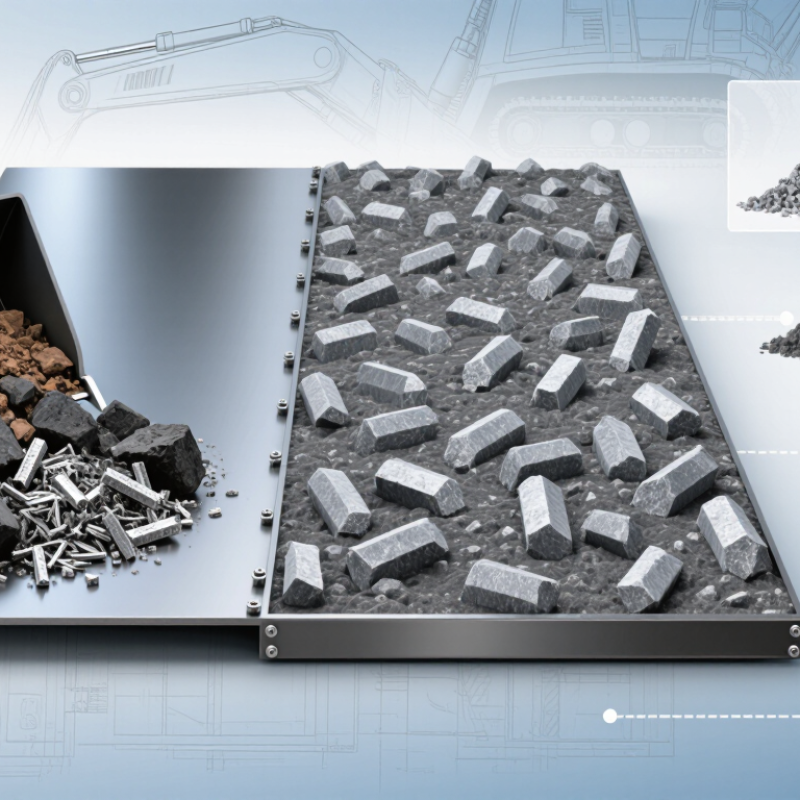
Chromium Carbide Overlay Plate is designed for severe sliding and impact wear. Its hard chromium-rich carbide network resists cutting, gouging, and repeated abrasion. A tough steel backing supports that wear-resistant surface during handling and installation. The contrast is visible in practice: one side fights abrasion, while the other side accepts welding and structural loads. Small details matter. Plate thickness, carbide distribution, dilution, heat input, and support design can change field performance.

Tribology researcher J. F. Archard described wear as “the progressive loss of substance from the operating surface of a body.” That definition remains useful here. It reminds engineers to study the actual wear mechanism, not only hardness numbers. Chromium Carbide Overlay Plate may perform extremely well against sliding mineral abrasion, but it is not a universal cure. Severe impact, corrosion, or sharp bending can expose weaknesses. A careless specification can still fail.

The stronger choice begins with evidence. Review feed material, impact energy, temperature, plate geometry, and replacement access. Compare service records rather than relying on impressive brochures. Experienced fabricators also examine weld procedures and thermal distortion before production. The best result is rarely the hardest surface alone. It is a balanced system, tested against the conditions that quietly destroy equipment every day.
Why Choose Chromium Carbide Overlay Plate?

Chromium Carbide Overlay Plate: Definition and Basic Structure

Why Choose Chromium Carbide Overlay Plate?

Chromium carbide overlay plate is a wear-resistant composite, not a solid alloy sheet. Its basic structure has two layers. A tough carbon-steel backing supports a welded surface layer. The overlay contains chromium-rich carbides inside an iron-based matrix. These hard particles resist sliding abrasion, while the backing absorbs impact and supports installation.

The surface is commonly produced by open-arc welding. During deposition, carbon and chromium react under heat. They form needle-like or block-shaped carbide phases. Many industrial grades measure approximately 55–65 HRC, although hardness depends on testing methods and chemistry.

ASTM G65 evaluates abrasive wear through a rubber-wheel test. This helps engineers compare volume loss under controlled conditions. The result is useful, but field performance can still differ.

Demand for wear protection is understandable. World Steel Association data recorded about 1.89 billion tonnes of crude steel production in 2023. Much of this material moved through crushers, chutes, hoppers, and conveyors.

The USGS Mineral Commodity Summaries 2024 estimated global chromite mine production near 44 million tonnes in 2023. That supply supports chromium-based alloy production, but it does not guarantee equal plate quality.

Chromium carbide overlay suits severe sliding abrasion better than repeated heavy impact. It can crack across the weld deposit. That cracking may look alarming, yet controlled checking can relieve stress. Poorly selected plates still fail. Plate thickness, welding direction, temperature, and impact load deserve careful review before specification.

How Chromium Carbide Overlay Plates Are Manufactured

Chromium carbide overlay plates are chosen for surfaces exposed to severe abrasion, impact, and sliding wear. Their performance begins with controlled manufacturing, not simply a hard surface claim. In practical fabrication, a tough carbon steel plate provides the structural base. Its surface is cleaned, inspected, and preheated when necessary. Oil, rust, and moisture must be removed before welding begins.

Manufacturers commonly apply a chromium-rich alloy through flux-cored arc welding. The welding head moves across the plate in measured passes. Each pass creates a wear-resistant layer containing hard chromium carbide particles. Heat input requires careful control. Excessive heat can increase dilution from the base steel and reduce surface hardness. Insufficient heat may cause poor fusion or unstable bead formation. Interpass temperature is checked during production. Cooling should be controlled, because sudden temperature changes may encourage cracking.

Small transverse cracks can appear in high-chromium overlays. They often relieve internal stress and may be acceptable within specified limits. However, crack size, spacing, and location require technical evaluation. This detail is sometimes overlooked. Finished plates are checked for thickness, hardness, flatness, bonding quality, and visible defects. Samples may also undergo metallographic examination or wear testing. The results should match the intended service conditions, since impact resistance and abrasion resistance rarely peak together. In my experience, choosing the thickest plate alone is an incomplete decision. Plate composition, welding quality, operating temperature, and installation method matter just as much.

Key Properties of Chromium Carbide Overlay Plates

Why Choose Chromium Carbide Overlay Plate?

Chromium carbide overlay plates combine a tough steel base with a highly wear-resistant welded layer. The overlay contains hard chromium carbides within a metallic matrix. This structure helps resist sliding abrasion, gouging, and repeated material flow. In practical service, the surface can protect chutes, hoppers, liners, and conveyor transfer points from rapid material loss. The base plate also provides support during handling and installation. It is not simply a harder sheet.

Key properties include high abrasion resistance, good surface hardness, and useful structural toughness. However, greater hardness does not guarantee better performance in every location. Severe impact can cause cracking or local spalling if the plate grade is poorly matched. Heat, weld dilution, overlay thickness, and operating temperature also affect service life. A careful specification should consider material size, impact energy, sliding speed, and maintenance access. Small details matter.

Tips: Inspect the wear pattern before ordering replacement plates. Use smooth transitions around bolt holes and corners. Follow qualified cutting and welding procedures. Avoid forcing a rigid plate into a curved installation. This mistake is common.

Field experience shows that correct fit and support often matter as much as nominal hardness. A thicker overlay may last longer, but it can increase weight and installation difficulty. Performance should be checked against real operating conditions, not only laboratory figures. Even experienced users should review failed plates before repeating the same design.

Why Choose Chromium Carbide Overlay Plate? - Key Properties of Chromium Carbide Overlay Plates

Property / Dimension Typical Data or Range Practical Significance Notes
Overlay composition Typically about 20–40% chromium and 4–5% carbon by mass Supports the formation of hard chromium-rich carbides in a wear-resistant metallic matrix Exact chemistry depends on the welding consumable and product specification
Primary hard phase Chromium carbides, commonly described as M7C3-type carbides Improves resistance to cutting, gouging, sliding abrasion, and mineral wear The carbide morphology and distribution affect actual service life
Overlay hardness Approximately 55–65 HRC; many deposits measure about 600–800 HV Provides a hard working surface for abrasive applications Hardness varies with alloy chemistry, dilution, welding process, and test method
Typical overlay thickness Commonly about 3–15 mm; heavier deposits may be available Allows designers to match wear allowance to the severity of the application Thickness should be selected according to wear rate, impact level, and plate support
Base plate material Usually a weldable low-carbon or low-alloy steel backing plate Provides structural strength, support, and practical attachment options The backing grade and thickness should be confirmed before fabrication or welding
Abrasion resistance High resistance to mineral, sand, coal, clinker, and other abrasive particles Helps reduce component replacement frequency and maintenance downtime Actual performance depends on particle size, hardness, pressure, impact, and material flow
Impact resistance Moderate; generally lower than that of conventional structural steel or impact-focused wear plate Suitable for abrasion with limited to moderate impact Severe repeated impact may require a tougher wear-resistant grade or a different design
Resistance to sliding wear Very good when hard particles slide across the surface under suitable loading conditions Useful for chutes, hoppers, liners, conveyors, and material-handling equipment Performance decreases when the application is dominated by impact, corrosion, or high temperature
Corrosion resistance Limited to moderate; not equivalent to stainless or dedicated corrosion-resistant alloys Can tolerate some mildly corrosive service, but abrasion remains its primary design purpose A separate corrosion-resistant overlay may be more appropriate for aggressive chemical environments
Operating temperature Often used in applications up to approximately 500–600 °C, subject to product design Retains useful wear performance in many elevated-temperature material-handling systems High-temperature exposure can reduce hardness; always verify the specified service limit
Fabrication method Can commonly be cut by plasma or abrasive methods and formed within defined limits Supports production of liners, wear strips, chutes, elbows, and custom components Conventional drilling and cold forming may be difficult because of the hard overlay
Repair and joining The steel backing can usually be welded with suitable procedures; overlay welding is possible with compatible consumables Enables attachment to equipment and localized repair in many plant environments Preheating, interpass control, and compatible filler selection may be required
Common applications Mining, cement, steel, power generation, recycling, quarrying, and bulk-material handling Protects high-wear areas such as chutes, hoppers, crusher parts, liners, and conveyor components Selection should consider abrasion type, impact energy, temperature, corrosion, and maintenance access

Note: Values shown are typical industry ranges for chromium carbide overlay plates. Actual properties vary by overlay chemistry, manufacturing process, plate thickness, test method, and application conditions.

Common Applications in Wear-Resistant Equipment

Why Choose Chromium Carbide Overlay Plate?

Common Applications in Wear-Resistant Equipment

Chromium carbide overlay plate is widely used where sliding abrasion removes ordinary steel within weeks. Its welded carbide layer protects the base plate while maintaining structural support. In mining, cement, and bulk-material plants, typical applications include transfer chutes, feed hoppers, crusher liners, conveyor skirts, and vibrating screens. The USGS Mineral Commodity Summaries 2024 estimated global cement production at about 4.1 billion tonnes in 2023. That volume creates continuous handling wear from clinker, limestone, and abrasive dust.

Steelmaking presents another demanding environment. The World Steel Association reported approximately 1.89 billion tonnes of crude steel production in 2023. Raw-material bins, sinter plants, coke handling lines, and ash conveyors often face repeated impact and sliding contact. Field inspections show that plate thickness, weld quality, and support spacing influence service life as much as carbide hardness. This is easy to overlook. A harder surface cannot correct poor installation.

In practice, engineers should match the overlay to the wear mechanism. CCO plate performs strongly against mineral abrasion, but severe impact, high temperature, or corrosive slurry may require a different alloy or composite design. I have seen premature cracking where operators selected hardness alone. That choice needs review. Cutting, welding, and fastening also require controlled procedures, because excessive heat can distort the plate or affect nearby equipment. Routine thickness checks near impact zones provide useful evidence before failures become expensive.

Why Choose Chromium Carbide Overlay Plate?

Common applications in wear-resistant equipment

Chromium carbide overlay plate is commonly selected for severe sliding and impact-abrasion zones because its hard chromium-carbide-rich layer protects a tougher steel base. The chart shows representative nominal overlay thicknesses used in common equipment; actual selection depends on material size, impact energy, throughput, temperature, and maintenance requirements.

Factors to Consider When Choosing an Overlay Plate

Why Choose Chromium Carbide Overlay Plate?

Choosing an overlay plate requires more than comparing hardness values. The wear mechanism matters. Sliding abrasion, impact, heat, and corrosion can produce very different failures. The 2024 USGS Mineral Commodity Summaries estimated global iron ore production at about 2.5 billion metric tons in 2023. This scale reflects the severe wear faced by chutes, hoppers, screens, and transfer points. In these applications, chromium carbide overlay can reduce replacement frequency when the wear pattern is correctly understood.

Check the base material, overlay thickness, crack pattern, and welding procedure. ASTM G65 testing can compare abrasive wear resistance, but laboratory results cannot fully reproduce wet ore, sharp rock, or repeated impact. Hardness alone can mislead. A very hard layer may perform poorly if impact causes spalling. The World Steel Association reported approximately 1.89 billion tonnes of crude steel production in 2023, showing the huge industrial environment where maintenance choices affect productivity. Still, production volume does not prove one plate suits every site. Field measurements remain essential.

Tips: Record plate temperature, material size, impact height, and failure location. Ask for test conditions, not only headline hardness. Inspect cut edges and welds before installation. A thinner plate may reduce weight, but it can shorten service life under heavy impact. Real sites are messier than test rigs. That assumption deserves review.

Ready for the Cabin Life?

“I went to the woods because I wished to live deliberately, to front only the essential facts of life, and see if I could not learn what it had to teach, and not, when I came to die, discover that I had not lived.”

- Henry David Thoreau