10 Best Quartzite Suppliers for Global Buyers
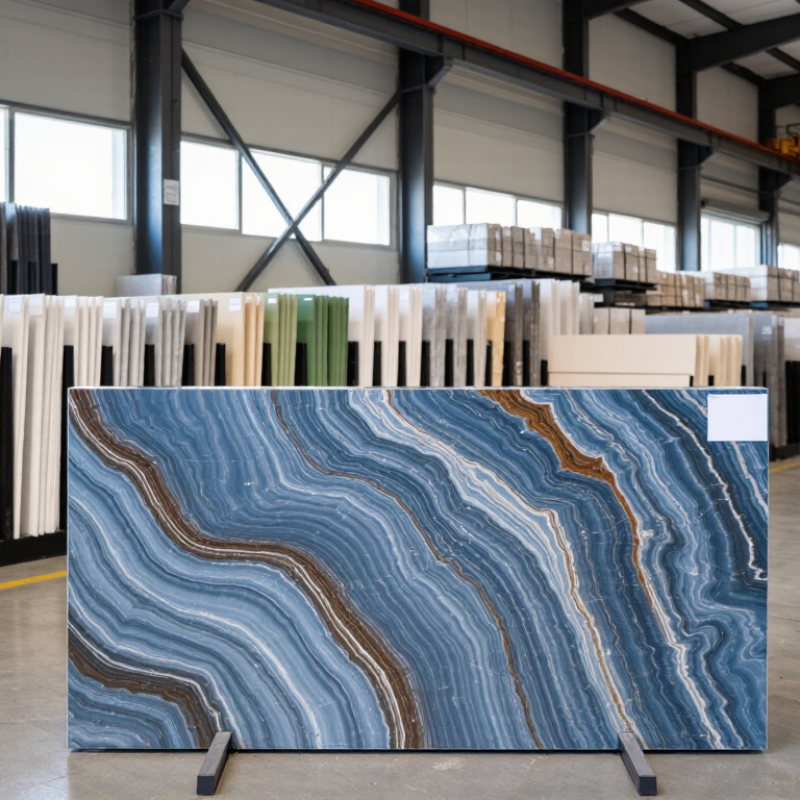
Choosing a quartzite supplier is not simply a search for attractive slabs. Global buyers need dependable quality, clear documentation, stable production, and practical shipping support. A dramatic blue surface may attract attention, but consistency matters more when a project requires hundreds of square meters.
As metamorphic petrologist Dr. W. G. Ernst has explained, “Quartzite records the pressure and temperature of the Earth’s crust.” That history affects hardness, grain structure, color, and performance. Buyers should examine quarry origin, block selection, slab thickness, surface finishing, and available test reports. They should also request current photographs, physical samples, and packing details before approving a purchase.
This guide reviews 10 quartzite suppliers serving international markets. It considers product range, fabrication capability, export experience, communication, lead times, and quality control. Reliable suppliers should answer specific questions, not hide behind attractive catalogs. Ask how slabs are inspected. Ask whether color variation is expected. Ask what happens when a shipment arrives damaged.
No ranking is flawless. A supplier may offer excellent stone but weaker logistics. Another may communicate well but provide limited selection. That matters. Real purchasing decisions include compromises, changing freight costs, and occasional misunderstandings. Careful buyers should verify every important claim independently. The strongest choice is rarely the loudest company. It is the supplier that delivers suitable quartzite, accurate information, secure packaging, and steady support from quarry to installation.
Quartzite: Definition, Characteristics, and Common Applications
Quartzite is a natural metamorphic rock formed when sandstone undergoes intense heat and pressure. Quartz grains fuse tightly, creating a dense and durable stone. Its surface may show soft clouds, sharp veins, or dramatic mineral movement. No two slabs look exactly alike.
Not every stone sold as quartzite has the same geological quality. Some materials contain more limestone or weaker minerals. A reliable supplier should provide technical data and, when needed, petrographic testing. Experienced buyers also inspect full slabs, not only small samples. Color can shift under warehouse lighting. This detail is easy to overlook.
Quartzite commonly appears in kitchen countertops, bathroom vanities, flooring, wall cladding, and exterior façades. Its high hardness helps resist scratching from daily use. Many varieties also tolerate sunlight better than some resin-based surfaces. However, quartzite is not maintenance-free. Porosity varies between selections, so professional sealing may be necessary. Acidic cleaners can dull vulnerable finishes. Heat resistance also depends on fabrication quality and installation details. A careless cut near a sink can still cause failure. Global buyers should request water-absorption figures, abrasion data, finish samples, and consistent packaging standards before placing an order. Supplier claims deserve verification.
Key Factors for Evaluating Quartzite Suppliers Worldwide
10 Best Quartzite Suppliers for Global Buyers
Choosing among the 10 best quartzite suppliers requires more than comparing polished photographs and attractive prices. Global buyers should verify quarry origin, slab availability, processing capacity, and export experience. Ask for recent block or slab photos, not only showroom images. Color can shift between batches. Reliable suppliers explain those variations clearly and provide physical samples before large orders. Check technical data, including water absorption, density, thickness tolerance, and recommended applications. An independent inspection can reveal cracks, resin repairs, or uneven polishing.
Tips: Request a detailed quotation with stone grade, dimensions, packaging, and delivery terms. Confirm Incoterms, lead times, packing methods, and replacement procedures in writing. A strong supplier answers quickly, but speed alone proves little. Review references from buyers in similar climates and project types. Do not ignore small inconsistencies. They may signal weak quality control.
Evaluate communication as carefully as stone quality. Time-zone differences are manageable when updates are structured and documented. Ask who checks slabs before loading and how claims are handled after delivery. Transparent suppliers share inspection records, packaging details, and realistic production schedules. The cheapest offer may become expensive after breakage, delays, or mismatched tones. Even experienced buyers can overlook these risks. That is worth remembering.
Regional Overview of Leading Quartzite Supply Markets
Quartzite supply is concentrated in a few geological regions, but each market offers different commercial strengths. Brazil remains a major source of colorful slabs, especially from Minas Gerais and Bahia. India supplies varied textures and competitive container volumes. Norway and Italy serve buyers seeking consistent tones, refined processing, and strong technical documentation. Turkey and South Africa also contribute distinctive materials, although availability can vary by quarry and season.
Trade data needs careful interpretation. The International Trade Centre tracks worked stone under HS 6802, but this category does not isolate quartzite. In 2023, the U.S. Geological Survey reported approximately 2.6 million metric tons of domestic dimension-stone production, including several stone types. That figure illustrates market scale, not quartzite output. Industry forecasts, including Grand View Research’s 2024 natural-stone analysis, indicate steady global growth through 2030, supported by residential renovation and commercial projects.
Regional sourcing decisions should combine export records with quarry-level evidence. Ask for recent block photos, slab thickness records, water-absorption results, and packing images. A container may look uniform in a showroom but reveal strong shade movement after installation. That risk is often underestimated. Buyers should also compare port distance, breakage rates, and replacement capacity. Statistical reports help identify supply markets; they cannot confirm whether a particular quarry can deliver the same pattern next year.
10 Best Quartzite Supply Markets for Global Buyers
This regional comparison uses rounded 2023 export values for worked natural stone under HS 6802 as a trade proxy, because international customs data does not isolate quartzite consistently from other natural stones. Brazil and India are especially relevant for slab and block sourcing, while Turkey, Italy, China, Spain, Portugal, Greece, South Africa, and Norway represent established natural-stone quarrying and processing markets.
Source context: UN Comtrade HS 6802 trade classification; values are rounded estimates and are not quartzite-only figures.
Profiles of Ten Notable Quartzite Suppliers for Global Buyers
Global quartzite buyers need more than attractive slabs. They need reliable quarry data, consistent grading, and clear export documents. These ten supplier profiles show different strengths across the market. A quarry owner offers direct block selection and geological records. A regional processor provides calibrated slabs and controlled finishes. An export specialist manages packing, shipping, and customs paperwork. A small family-operated yard may offer unusual colors, but its supply can change quickly.
A large fabrication supplier usually supports repeat commercial orders and custom thicknesses. A restoration-focused supplier keeps matching lots for heritage projects. A project-based distributor coordinates samples, inspections, and delivery schedules. A premium natural-stone trader may provide rare veining, though higher variation requires careful approval. A warehouse supplier helps buyers inspect finished slabs before purchase. A digital-first supplier offers fast quotations, but online images should never replace physical samples.
Experienced buyers should request quarry location, test reports, water absorption data, and recent batch photographs. Check whether resin treatment or mesh backing is disclosed. Ask how the supplier handles chipped edges, color shifts, and delayed vessels. These details reveal practical reliability. Some suppliers communicate well but document poorly. Others provide strong reports but respond slowly. That weakness matters. A professional review should compare product quality, inspection access, packaging strength, and after-sales cooperation rather than price alone. Mistakes still happen, especially when lighting changes the stone’s appearance. Careful buyers leave room for that uncertainty.
Import, Quality Control, and Supplier Selection Considerations
Choosing the 10 best quartzite suppliers for global buyers requires more than comparing photographs and prices. In practice, quarry consistency matters most. The USGS Mineral Commodity Summaries 2024 places quartzite within broader dimension-stone reporting, so public data rarely compare suppliers directly. That limitation deserves attention. Buyers should request quarry location, production capacity, block yield, and recent export records before negotiating.
Quality control must begin before loading. Ask for independent petrographic analysis and test results for water absorption, density, compressive strength, and flexural strength. ASTM C97, ASTM C170, and ASTM C880 provide useful testing frameworks for dimension stone. Inspecting one polished slab is not enough. A container may contain different tones, fissures, or resin repairs. Request tagged samples from several blocks, then compare them under natural and artificial light. Small differences become obvious across a hotel lobby.
Import planning also affects the real purchase price. Check the agreed Incoterm, port handling, fumigation rules, crate dimensions, and breakage responsibility. The 2023 World Natural Stone Report highlights continuing international movement in finished and semi-finished stone, but freight volatility can change supplier rankings quickly. UN Comtrade data can help review trade flows, although HS classifications do not always identify quartzite precisely. A supplier scorecard should weigh consistency, documentation, claims response, and delivered cost. Price alone misleads. I would still reserve part of the first order for testing, because even a careful selection process can miss seasonal quarry variation.