DWELL BEYOND THE ORDINARY
Choosing the right Flag Pole for global sourcing requires more than comparing prices and photographs. A pole may look polished online, yet fail when exposed to strong wind, salt air, or repeated flag movement. The correct choice begins with the installation site.
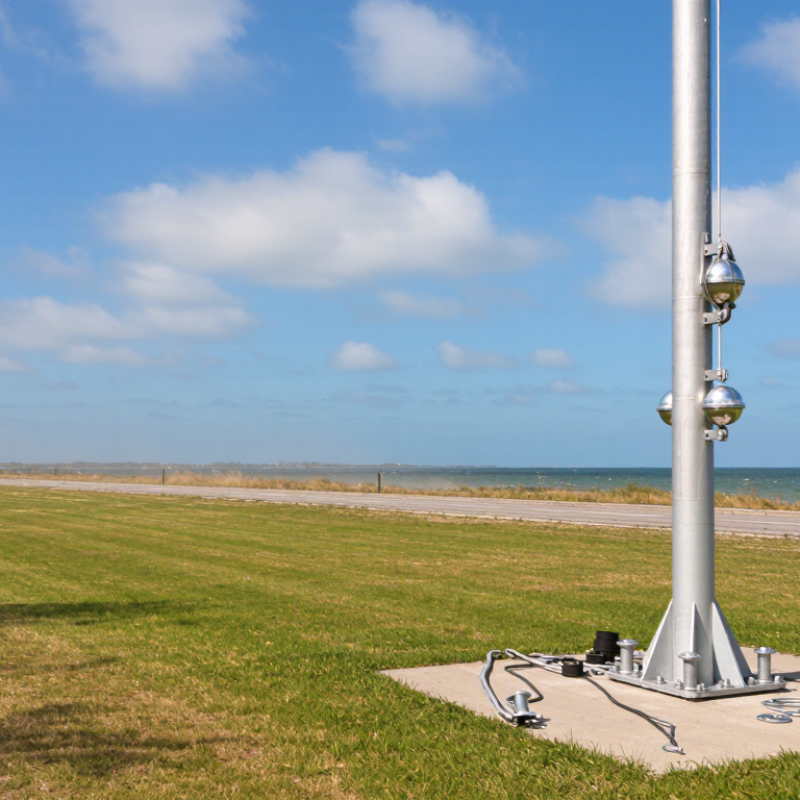
Flag pole specialist Michael R. Lawson explains, “A reliable pole is selected for its environment, not merely for its appearance.” This principle deserves attention. Height, shaft diameter, wall thickness, and internal hardware must match local conditions. Coastal projects may require marine-grade aluminum, durable powder coating, or stainless-steel fittings. Inland sites may face different risks, including ice, dust, and sudden wind changes.
Global buyers should request engineering drawings, material certificates, finish specifications, and wind-load calculations. Factory photographs are useful. Independent inspections are better. Ask how each Flag Pole is packed, because dented shafts can create expensive delays at the destination. Confirm whether the manufacturer can provide replacement halyards, truck assemblies, cleats, and installation guidance.
Supplier experience matters, but it is not enough. A long company history does not guarantee consistent production. Review recent projects, sample quality, testing records, and communication speed. Small details often reveal larger problems. Threads should turn smoothly. Surfaces should feel even. Components should fit without force.
There is no universal best pole. That assumption can mislead buyers. A design suitable for a calm commercial plaza may be unsuitable for an exposed coastal road. Local engineers and installers should review the final specification before purchase. Even careful sourcing can miss something. That is why clear documentation, practical testing, and honest technical questions remain essential.
Global sourcing begins with a precise flagpole brief, not a catalog image. Define the required height from viewing distance, surrounding buildings, and local wind exposure. A 6-meter pole may suit a courtyard, while a 12-meter pole may disappear beside a warehouse. Measure the ground carefully.
Flag count changes the engineering decision. One flag needs different hardware from three flags flown together. Multiple flags add weight, sail area, rope movement, and maintenance points. I have seen buyers specify height correctly but overlook the combined load of wet fabric. That small omission can affect foundation design and operating safety. Ask whether flags must rotate, lower easily, or remain displayed overnight.
Site conditions deserve equal attention. Record soil type, drainage, access for lifting equipment, and nearby power lines. A beautiful entrance can hide poor installation access. For coastal or industrial sites, salt, dust, and chemicals may shorten service life. Choose corrosion-resistant materials and finishes suited to measured exposure, not assumptions. Service life should include the pole, hinges, pulleys, ropes, fasteners, and foundation. Request technical drawings, load data, inspection guidance, and replacement-part availability. These documents help compare suppliers using evidence rather than persuasive photographs. I would question a long-life promise without clear maintenance intervals. Sometimes, a simpler pole is more dependable. Leave room for revision. Future branding, extra flags, or a changed site layout may alter today’s calculation.
Define flagpole needs by height, flag count, site conditions, and expected service life.
Select a pole that remains visually proportional to the building, entrance, and surrounding landscape.
Allow enough clearance between flags and choose a suitable halyard or pulley configuration.
Review wind exposure, soil, access for installation, foundation depth, and local building requirements.
Specify corrosion resistance, coating quality, hardware durability, and maintenance access for the target environment.
The chart shows practical planning ranges for common installation contexts. Final dimensions should be verified against local wind-load codes, foundation design, and site-specific engineering requirements.
How to Choose the Right Flag Pole for Global Sourcing?
A flag pole should be selected from site conditions, not appearance alone. ASCE 7-22 provides wind speed maps for different Risk Categories. These categories reflect the consequences of structural failure. Risk Category I covers low-hazard structures, while Category IV includes essential facilities. Many ordinary public or commercial projects fall within Categories II or III.
The project location matters greatly. ASCE 7-22 also considers wind Exposure Categories B, C, and D. Exposure B usually describes urban or suburban areas with nearby buildings and trees. Exposure C applies to open terrain, while Exposure D covers flat areas near large bodies of water. A coastal site can create demanding conditions. Do not use a national average wind speed.
Ask the supplier for calculations based on the exact site, risk category, exposure, pole height, and flag area. The design should review gust effects, foundation strength, base connections, wall thickness, and corrosion protection. A taller pole may need a deeper concrete foundation than expected. It may also require thicker sections or stronger fittings. Local building officials may have adopted an earlier code edition, so verify the governing requirements before ordering. This step is often missed. I have seen sourcing decisions rely on a wind-speed map alone, then require expensive revisions. ASCE 7-22 is an important design reference, but a qualified structural professional should confirm the final pole and foundation design.
Wind pressure is not a minor specification. It controls the pole, fittings, foundation, and shipping requirements. A useful starting formula is q = 0.613V², where q is pressure in newtons per square metre and V is wind speed in metres per second. This relationship matters because pressure rises with the square of velocity. A wind speed increase from 30 to 40 metres per second can raise pressure by nearly 78 percent. That difference can change the entire design.
Do not size a pole from height alone. Check the flag’s projected area, fabric weight, shape, and airflow resistance. A solid banner usually creates more drag than a porous flag. Gusts, turbulence near buildings, terrain, and seasonal storms also affect loading. In practical site reviews, the foundation often receives too little attention. A strong pole can still fail if the base is shallow, poorly reinforced, or installed in weak soil.
For global sourcing, request the design wind speed, calculation method, safety factors, material grade, wall thickness, and foundation assumptions. Compare suppliers using the same load conditions. Local engineering approval may still be required, because wind codes differ between regions. A spreadsheet can look precise while hiding weak assumptions. I have seen small changes in flag size produce large changes in bending load. That is why the final selection should include a qualified structural review, especially for exposed coastal or high-rise locations. Better data may cost more at the quotation stage. It usually costs less than replacing a damaged installation.
Material choice affects shipping cost, installation labor, and service life.
According to ASM Handbook, Volume 21, aluminum weighs about 2.70 g/cm³. Steel reaches approximately 7.85 g/cm³. Typical fiberglass composites range from 1.8 to 2.0 g/cm³. That difference is significant. A longer steel pole may require stronger lifting equipment and deeper foundations.
Steel usually offers high stiffness and impact resistance. Its strength varies widely by grade, so “steel” alone is not a complete specification. Aluminum provides a strong strength-to-weight ratio and easier handling. However, thinner aluminum sections can deflect noticeably under wind loads.
Fiberglass does not rust and can provide useful electrical insulation. Its bending performance depends heavily on fiber direction, resin quality, and temperature. The ISO 1461 corrosion guidance shows why exposed steel needs a protective system, such as galvanizing. Even small coating damage can become a maintenance concern in coastal air. ASCE 7-22 wind-load provisions should guide pole sizing, not material preference alone. I would not choose by price only. That shortcut can fail.
Tips: Check wall thickness, yield strength, joint design, coating details, and tested wind speed. Ask for independent inspection records. Compare packed dimensions, not only product weight. Aluminum often suits frequent relocation. Steel may fit demanding sites. Fiberglass deserves consideration where corrosion and electrical exposure matter. Mistakes happen. Verify the soil report, too.
A global flag pole is not selected by height alone. EN 1991-1-4 calculates wind actions using basic wind velocity, terrain category, altitude, topography, and structural response. Ask for the design wind speed, pressure coefficients, deflection limit, and foundation reactions. The supplier should identify the applicable National Annex. A generic “tested for wind” statement is weak evidence. It may pass a brochure, not a project review.
ASTM F1554 is often misunderstood. It specifies anchor bolts, not complete flag poles. Grades 36, 55, and 105 have different mechanical requirements. Confirm bolt diameter, embedment, nuts, washers, galvanizing, weldability, and lot traceability. Request mill certificates and inspection records. Small detail, large consequence. I would also verify whether the project engineer accepts ASTM components within a Eurocode design.
Incoterms 2020 define delivery responsibilities, costs, and risk transfer. Under FCA, the seller delivers goods to the nominated carrier. Under DAP, the buyer usually handles import clearance, duties, and taxes. Incoterms do not define unloading, engineering approval, or product conformity. UNCTAD’s Review of Maritime Transport 2023 reports that over 80% of world merchandise trade by volume moves by sea. Specify seaworthy packing, moisture protection, loading photos, serial numbers, and insurance responsibilities. I have seen “delivered” treated as “installed.” That assumption can fail.
| Sourcing Dimension | Verified Requirement or Data | Why It Matters for Flag-Pole Selection | Recommended Evidence | Procurement Decision |
|---|---|---|---|---|
| Design standard scope | EN 1991-1-4 addresses wind actions on structures. It is not a complete flag-pole product standard and should be applied with the relevant National Annex. | Wind exposure, terrain category, altitude, topography, seasonality, and local national parameters can change the required pole strength and foundation design. | Structural calculation package identifying the adopted Eurocode clauses, National Annex, wind region, terrain category, and design assumptions. | Do not approve a pole using only a generic wind-speed statement. |
| Wind-load input | The basic velocity pressure relationship is q = ½ρv², where ρ is air density and v is wind speed. EN 1991-1-4 design procedures also use factors for exposure, turbulence, orography, and structural response. | Wind pressure increases approximately with the square of wind speed; a modest increase in specified wind speed can significantly increase bending demand. | Project wind map, site coordinates, terrain classification, topographic assessment, and calculation of peak or design velocity pressure. | Specify site wind criteria before comparing pole quotations. |
| Pole geometry | Record overall height, shaft outside diameter, wall thickness, taper, number of sections, joint arrangement, flag area, flag porosity, and hardware projection. | Projected flag area and fittings affect drag and overturning moment. Section joints and local holes can govern fatigue or buckling performance. | Dimensioned drawings, mass schedule, connection details, weld details, and installation instructions. | Reject quotations that state only pole height without design geometry. |
| Anchor-bolt standard | ASTM F1554 covers anchor bolts and specifies grades including 36, 55, and 105. It does not specify the complete flag-pole design or foundation. | The anchor-bolt grade must be compatible with the base plate, nuts, washers, embedment, grout, concrete, and calculated tension and shear forces. | Mill test certificate, grade marking or traceability records, bolt diameter and length, thread details, nut and washer specification, and coating information. | Treat ASTM F1554 as an anchor-bolt requirement, not as proof that the pole itself complies with a structural standard. |
| ASTM F1554 Grade 36 | Minimum yield strength: 36 ksi (approximately 248 MPa). Minimum tensile strength: 58 ksi (approximately 400 MPa). | A lower-strength anchor option that may be suitable where the engineered demand and connection design permit it. | Compliant material certificate and inspection records linked to the supplied lot. | Use only when confirmed by the connection and foundation calculations. |
| ASTM F1554 Grade 55 | Minimum yield strength: 55 ksi (approximately 380 MPa). Minimum tensile strength: 75 ksi (approximately 517 MPa). | Provides higher specified strength than Grade 36 and is commonly considered for more demanding anchor assemblies. | Material test report, chemical and mechanical results where required, and dimensional inspection report. | A practical baseline to evaluate when the design requires additional anchor capacity. |
| ASTM F1554 Grade 105 | Minimum yield strength: 105 ksi (approximately 724 MPa). Minimum tensile strength: 125 ksi (approximately 862 MPa). | High-strength anchors may reduce required diameter in some designs, but connection ductility, installation control, and pretension requirements still need engineering review. | Grade-specific mill certificate, traceability, hardness or testing records where specified, and installation method statement. | Do not select solely because it has the highest strength; verify the complete connection design. |
| Foundation and soil | Foundation design should account for overturning moment, shear, uplift, concrete strength, reinforcement, soil bearing, sliding, rotation, and frost or groundwater conditions where applicable. | A structurally adequate shaft can still fail if the foundation or soil assumptions are unsuitable for the installation site. | Geotechnical parameters, foundation drawings, reinforcement schedule, concrete specification, and installation inspection plan. | Make foundation responsibility explicit in the purchase contract. |
| Corrosion protection | Define material, coating system, coating thickness, surface preparation, repair method, drainage, and compatibility between dissimilar metals. | Marine, industrial, de-icing-salt, and high-humidity environments can shorten service life if the coating system is not matched to exposure. | Coating specification, inspection report, thickness readings, repair procedure, and environmental exposure classification. | Compare lifecycle protection, not only initial purchase price. |
| Incoterms 2020: EXW | The seller places the goods at the named premises. The buyer generally arranges loading, export formalities, carriage, insurance, import clearance, and delivery. | The buyer carries substantial logistics and export-compliance responsibilities, which may be difficult when sourcing cross-border. | Named place, loading responsibility, export documentation process, pickup schedule, and cost allocation. | Use only when the buyer can manage origin-country logistics and export procedures. |
| Incoterms 2020: FCA | The seller delivers the goods to the buyer's nominated carrier at the named place and completes export clearance where applicable. | FCA can provide clearer allocation of export responsibility than EXW and is suitable for containerized or multimodal shipments. | Exact named place, handover point, packaging requirements, transport booking, and export documents. | Often a balanced option when the buyer controls international freight. |
| Incoterms 2020: FOB | For sea or inland-waterway transport, the seller delivers when the goods are loaded on board the vessel at the named port of shipment; risk transfers at that point. | Useful for traditional port-to-port cargo, but it is not the preferred rule for container shipments that are handed to a terminal before loading. | Named port, vessel booking, export clearance, loading confirmation, and marine insurance decision. | Choose only when the shipment structure genuinely matches port loading on board. |
| Incoterms 2020: CIF | The seller pays cost, insurance, and freight to the named destination port, but risk transfers when the goods are loaded on board at the shipment port. The rule is for sea or inland-waterway transport. | The buyer should confirm the insurance level and understand that freight payment by the seller does not mean the seller retains transit risk. | Insurance certificate, bill of lading, named destination port, freight terms, and import-clearance responsibility. | Check whether the contracted insurance coverage is sufficient for the cargo value and route. |
| Incoterms 2020: DAP / DDP | Under DAP, the seller delivers at the named destination ready for unloading and the buyer handles import clearance. Under DDP, the seller also handles import clearance, duties, and taxes, subject to local legal ability. | These terms can simplify delivery planning but may increase the quoted price and create tax or customs issues for the seller and buyer. | Named delivery location, unloading equipment, import registration, duty and tax allocation, and customs documentation. | Use DAP when the buyer will manage import; use DDP only after confirming the seller can legally perform import obligations. |
| Final approval gate | Approve only after structural calculations, material certificates, coating records, foundation documents, packing details, inspection criteria, and the selected Incoterm are consistent with the destination-country requirements. | Global compliance depends on the complete supply chain and installation scope, not on one standard or one certificate. | Signed technical submittal, inspection and test plan, approved drawings, commercial contract, packing list, and agreed shipping documents. | Release production and shipment only after all open compliance items are closed. |
Note: EN 1991-1-4 design values must be established for the actual installation site and applicable National Annex. ASTM F1554 grades describe anchor bolts, while Incoterms 2020 allocate delivery responsibilities, costs, and risk; neither standard replaces a project-specific structural design or local legal review.
“I went to the woods because I wished to live deliberately, to front only the essential facts of life, and see if I could not learn what it had to teach, and not, when I came to die, discover that I had not lived.”
- Henry David Thoreau