China Best Aluminum Composite Panel Manufacturer?
Choosing the China best Aluminum Composite Panel Manufacturer requires more than comparing prices or browsing attractive product photos. A reliable supplier should demonstrate consistent quality, practical experience, and clear technical knowledge. Aluminum composite panels appear simple, yet their performance depends on core composition, aluminum thickness, coating systems, bonding strength, and production control.
This guide examines how Chinese manufacturers serve architectural, commercial, signage, and interior projects. It considers factory capacity, certification records, fire-performance options, customization, packaging, and delivery communication. Real project experience matters. A panel that looks smooth in a showroom may behave differently under strong sunlight, heavy rain, or repeated temperature changes. Small details often decide long-term results.
Look beyond marketing language.
A dependable Aluminum Composite Panel Manufacturer should provide verifiable samples, technical data sheets, coating information, and honest installation guidance. Site conditions must also be discussed, including wind exposure, building height, humidity, and cleaning requirements. Some suppliers offer impressive customization but provide weak after-sales support. Others communicate well but lack stable production capacity. This guide does not assume that one company fits every project. That would be too convenient, and probably inaccurate.
Instead, it offers a practical framework for comparing manufacturers in China. Readers can evaluate material quality, engineering support, factory transparency, compliance documentation, and total project value. The strongest choice is not always the cheapest or the largest. It is the supplier that can explain limitations clearly, respond consistently, and deliver panels that perform as promised. Even careful buyers may overlook a detail. A structured review helps reduce that risk.
What Is an Aluminum Composite Panel Manufacturer?
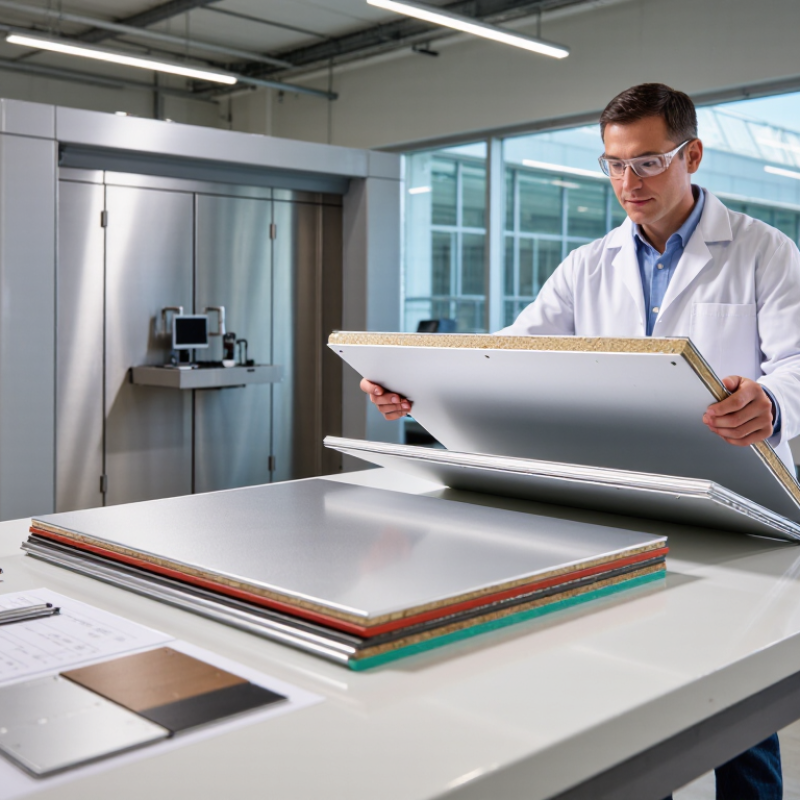
An aluminum composite panel manufacturer designs, produces, and verifies panels used for walls, signs, interiors, and building façades. It is more than a distributor with a warehouse. The manufacturer combines aluminum sheets, a mineral or polymer core, protective coatings, and controlled bonding pressure. Every layer matters.
A reliable manufacturer manages coil preparation, surface treatment, coating thickness, cutting, and final inspection. Technicians may check color consistency under standard lighting and measure panel flatness with calibrated tools. They also test peel strength, impact resistance, weathering, and fire performance when required by the project. Clear technical data, batch records, and safety documents help architects and contractors make informed decisions.
Real experience often appears in small details. A skilled production team understands how panels behave after routing, folding, drilling, and outdoor exposure. It can recommend suitable thickness, core type, coating, and tolerances for a specific application. However, no factory is perfect. A coating may vary slightly between production batches, and poor storage can damage finished panels. Honest manufacturers disclose these risks and improve their process after complaints, site inspections, and installation feedback. The best choice is therefore not simply the lowest price. It is a manufacturer with traceable quality control, responsive engineering support, and evidence that its panels perform in real projects.
How to Evaluate Chinese Aluminum Composite Panel Manufacturers
China Best Aluminum Composite Panel Manufacturer?
How to Evaluate Chinese Aluminum Composite Panel Manufacturers
Do not judge a manufacturer by catalog photos or the lowest quotation. Request factory audit records, recent project references, and complete technical datasheets. Check aluminum alloy, skin thickness, core type, coating system, and panel flatness. A reliable supplier should provide batch traceability from coil to finished panel. Ask for samples from normal production, not specially prepared pieces.
Fire performance requires careful verification. Request test reports from accredited laboratories and confirm the tested panel structure matches your purchase order. Relevant checks may include EN 13501-1, ASTM E84, or applicable Chinese standards. The 2024 UNEP Global Status Report states that buildings and construction consume about 32% of global energy. Better manufacturers therefore explain coating durability, insulation limits, and installation details, rather than making vague energy-saving claims.
Look for measurable evidence. A 2023 ISO Survey recorded more than 1.2 million ISO 9001 certificates worldwide, but certification alone proves little about panel quality. Review nonconformance records, corrective actions, and inspection frequency. Ask how many panels failed internal testing last quarter. An uncomfortable answer can be useful. Also compare salt-spray results, coating thickness, peel strength, and warranty exclusions. Some suppliers respond slowly after payment. Test communication before ordering. The “best” manufacturer is not always the cheapest or largest; it is the one whose documents, production controls, and delivered samples remain consistent.
Which Production Standards and Materials Matter Most?
China Best Aluminum Composite Panel Manufacturer?
Which Production Standards and Materials Matter Most?
A reliable aluminum composite panel manufacturer should prove more than a polished sample. Ask for batch records, coating thickness, core composition, and test dates. The International Aluminium Institute reports that recycled aluminum uses about 95% less energy than primary aluminum. Responsible production therefore includes verified recycled content and controlled alloy sourcing. For exterior façades, aluminum skins commonly use 3003 or 5005 alloys. Their thickness matters. Thin skins can dent around loading bays and busy entrances.
Fire performance deserves stricter attention. Specify a non-combustible or limited-combustibility core when the building code requires it. Request test evidence under EN 13501-1, ASTM E84, or applicable national standards. These tests are not interchangeable. A certificate should identify the exact panel construction, not only the factory. Coating quality also affects service life. AAMA 2605 evaluates high-performance exterior coatings, including color retention and chalk resistance. Still, salt spray results alone cannot predict every coastal project. Real exposure is messier.
Tips: Check peel strength using ASTM D1781 or an equivalent method. Inspect panel flatness under angled light. Measure aluminum thickness with a calibrated gauge. Request production samples from different lots. One weakness remains easy to miss: adhesive consistency can vary across large panels. Ask how operators control temperature, pressure, and curing time. A supplier that admits limitations may be more reliable than one promising perfection.
China Best Aluminum Composite Panel Manufacturer? Which Production Standards and Materials Matter Most?
Coating thickness is one measurable indicator of ACP durability. The chart compares the minimum dry-film thickness specified by three widely used AAMA architectural coating standards.
AAMA 2603, 2604, and 2605 specify progressively higher coating-performance levels, with minimum dry-film thicknesses of approximately 5, 20, and 30 micrometres respectively. When evaluating an aluminum composite panel, also verify the aluminum skin alloy and thickness, core fire classification, adhesion, weather resistance, and compliance with the applicable local product standard.
Reference: AAMA 2603, AAMA 2604, and AAMA 2605 architectural coating specifications.
How Do Manufacturing Capacity and Quality Control Compare?
China Best Aluminum Composite Panel Manufacturer?
Manufacturing capacity should mean more than a large factory gate. A credible producer should disclose annual panel output, line count, coil width, core type, and average capacity utilization. World Aluminium reported global primary aluminum production of about 72.8 million tonnes in 2024. That volume supports strong material availability, but it does not prove finished-panel consistency. Buyers should request production records, not impressive photographs.
Quality control is more visible in small details. Incoming aluminum coils need checks for alloy, thickness, coating adhesion, and surface defects. During lamination, operators should monitor temperature, pressure, and line speed. Independent testing can include peel strength, impact resistance, coating thickness, and fire classification under applicable standards such as EN 13501-1 or ASTM procedures. Batch samples should remain traceable to the original coil and production date.
Documentation matters.
The ISO Survey 2023 recorded more than 1.26 million ISO 9001 certificates worldwide. Certification shows a managed quality system, not flawless panels. A supplier should still provide recent test reports, calibration records, corrective-action reports, and inspection photos. In practice, some factories test frequently but record poorly. Others document everything while missing edge defects. That uncomfortable gap deserves attention. A factory that explains rejected batches honestly may be more reliable than one promising zero defects. Ask for a trial order, measure panels on arrival, and compare results with the approved sample.
How Can Buyers Select the Best Manufacturer for Their Project?
China Best Aluminum Composite Panel Manufacturer?
How Can Buyers Select the Best Manufacturer for Their Project?
China remains a major sourcing market for aluminum composite panels. A 2024 Grand View Research assessment projects global market growth of about 6% annually through 2030. Buyers should examine more than price. Production evidence matters.
Ask for recent test reports covering fire performance, peel strength, coating durability, and dimensional tolerance. ASTM E84, EN 13501-1, and relevant ISO testing can support comparison. However, a certificate alone is not enough. Check its product scope, test date, laboratory, and matching panel specification.
Request physical samples from the same production line. Measure panel thickness, aluminum skin thickness, surface flatness, and color consistency. A professional manufacturer should explain its alloy, core composition, coating system, and curing process clearly. ISO 9001 certification shows quality management, but it does not guarantee every panel meets project requirements.
Review factory capacity, inspection records, packaging methods, and traceability codes. A factory visit can reveal practical details, such as dusty storage areas or poorly protected panel edges. These small signs matter. A low quotation may reflect efficient production, or hidden compromises. Ask for a written warranty with measurable conditions. Also compare delivery history using references from similar projects, not only promotional photographs. No checklist is perfect. Even experienced buyers sometimes overlook installation compatibility. Verify that the proposed panel system matches local fire rules, wind loads, climate exposure, and the installer’s methods before signing.